Updated August 2026
Opelika, Alabama does not have one "best" neighborhood, and anyone who tells you otherwise is selling you something. What it has is a handful of genuinely different places to live inside one small city. Four of them are on the National Register of Historic Places. One is built around 54 holes of championship golf. And there's a whole lot of new construction going up on the newer side of town.
I'm Amy Cotney, REALTOR®, a licensed real estate salesperson with Roots Real Estate - Investment Development in Auburn. I sell across Lee County, and Opelika is the market I get the most questions about and the one buyers understand the least when they land here.
So the real question isn't which Opelika neighborhood is best. It's which one is best for what you actually need. Let me walk you through it.
The Bottom Line
- Opelika, Alabama has four National Register historic districts: Railroad Avenue (listed 1984), Geneva Street (1987), Northside (2001), and the Pepperell Mill and Mill Village district (2014). Each one has published street boundaries, so you can tell exactly what's in and what's out.
- National Village is a residential golf community next to the Robert Trent Jones Grand National courses, which the Trail brands as Auburn/Opelika (rtjgolf.com, retrieved August 2026).
- The new-construction pipeline here is deep. More than 2,000 new residential units were entitled in Opelika in 2025, and more than 6,500 approved residential lots plus more than 2,500 townhouse, multi-family or mixed-use units are approved or in some stage of planning or construction (City of Opelika, February 2026).
- The city adopted a one-year planning moratorium on certain new residential approvals, running May 1, 2026 through April 30, 2027. Projects already approved are not affected.
- Opelika City Schools runs nine schools, pre-K through 12.
- Opelika branded itself Alabama's first "Gig City" in 2015 on the back of a municipal fiber network it built and then sold to Point Broadband in 2018.
How to narrow down Opelika before you tour anything
Every buyer I take through Opelika is really sorting on three things, whether they say it out loud or not.
Old house or new house. This is the biggest fork in the road here. Opelika's historic districts hold homes built from the 1880s through the 1950s. The newer subdivisions on the north and west sides are mostly builder product from the last couple of decades. Those are two completely different maintenance budgets, two different renovation realities, and honestly two different personalities.
How close to downtown. Opelika's downtown core is compact, and the grid around it is tight: small lots, short blocks, the oldest housing stock in the city. The farther out you go, the more lot you get.
Golf, or not. National Village exists because of Grand National. If that's your thing, it's a specific and easy answer. If it isn't, you can skip it entirely.
Once you've picked a side on those three, the list of neighborhoods worth your Saturday gets short fast.
Opelika's National Register historic districts
Here's the thing almost no other Opelika neighborhood guide will tell you: these districts have actual, published boundaries. They're not vibes. They're listed on the National Register of Historic Places with reference numbers and street lines, and the nomination documents are public. If you're buying an older home here, knowing which side of the line you're on matters.
Railroad Avenue Historic District
This is the downtown and railroad core, listed on the National Register in 1984 (NRHP ref #84000640). The published boundary runs roughly along 7th and 10th Streets, 1st Avenue, and Avenue B.
This is the restaurant-and-storefront part of Opelika you're picturing. It's the oldest commercial fabric in town, and the housing beside it sits on the smallest lots in the city.
Geneva Street Historic District
Listed in 1987 (NRHP ref #87000981), with a boundary running roughly along South 7th, Glenn, Stowe, Geneva, and South 10th Streets, plus Avenue C.
Geneva is one of my favorite pockets in the whole Auburn/Opelika market. The homes have real architectural character, and the streets have the kind of mature tree canopy you cannot install later at any price.
Northside Historic District
Listed in 2001 (NRHP ref #01001409). The boundary runs roughly along 7th Avenue, 3rd Street, 2nd Avenue, and North 11th Street.
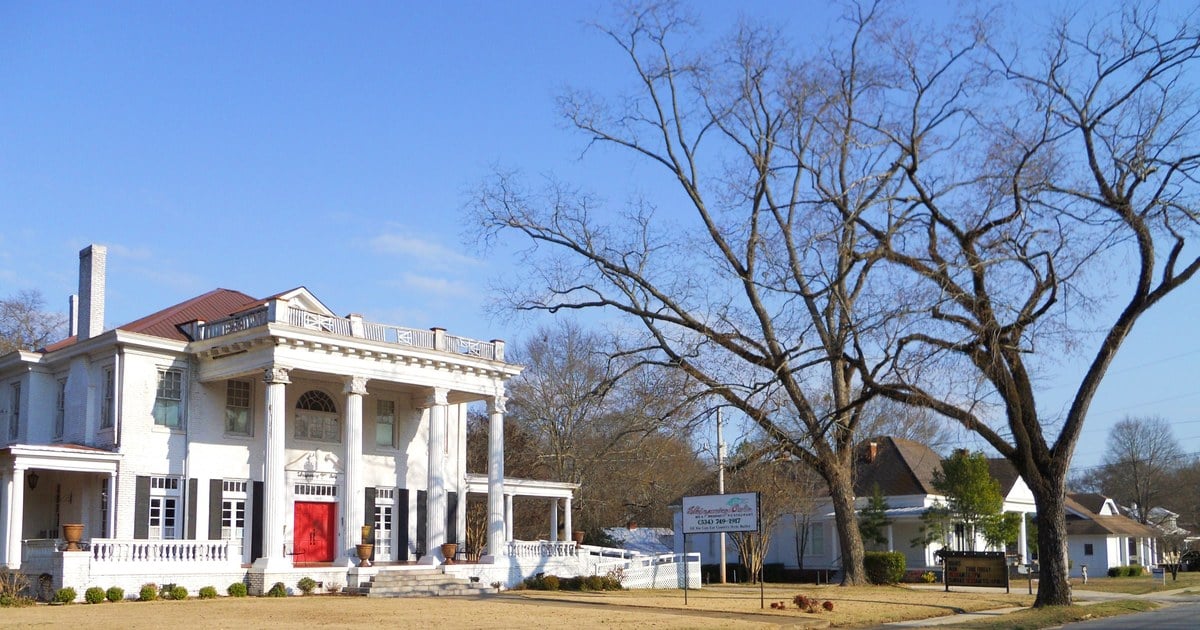
The nomination documents Northside's housing as Queen Anne, Bungalow, Neoclassic, Mission, and Tudor Revival, built between 1880 and 1951, alongside vernacular cottages and later ranch homes. If you love a front porch and original millwork, start here.
Pepperell Mill and Mill Village Historic District
The newest of the four listings, added in 2014 (NRHP ref #14000090). It covers roughly 134 acres bounded by Pepperell Parkway, 28th Street North, 1st Avenue, and 30th Street North, and the housing there was built mostly between 1925 and 1960.
It's a distinct piece of the city's history and a distinct housing type: mill village stock, built to a pattern, on a street grid that changes character halfway through the district.
The four districts, side by side
District | Listed | NRHP ref # | Approximate boundary |
|---|---|---|---|
Railroad Avenue Historic District | 1984 | 84000640 | Roughly 7th and 10th Streets, 1st Avenue, and Avenue B |
Geneva Street Historic District | 1987 | 87000981 | Roughly South 7th, Glenn, Stowe, Geneva, and South 10th Streets, plus Avenue C |
Northside Historic District | 2001 | 01001409 | Roughly 7th Avenue, 3rd Street, 2nd Avenue, and North 11th Street |
Pepperell Mill and Mill Village Historic District | 2014 | 14000090 | Pepperell Parkway, 28th Street North, 1st Avenue, and 30th Street North |
Listing years, reference numbers, and boundaries: National Register of Historic Places nomination documents for Lee County, Alabama, National Park Service, retrieved August 2026 and linked individually above. Boundaries are the district descriptions as recorded, not survey lines; confirm the exact parcel before you rely on it.
A practical warning on all four: a National Register listing is a recognition, not automatically a set of renovation rules. Local ordinances and any covenants are separate questions. Ask me before you buy if you're planning to change windows, siding, or a roofline.
National Village at Grand National
National Village is a residential golf community, and the Robert Trent Jones Golf Trail's own site puts it plainly: "National Village, a golfing community on the Trail, is adjacent to these courses."
Grand National itself is 54 holes across the Links, Lake, and Short courses, and it has hosted NCAA Division I men's and women's national championships along with PGA Tour events. Thirty-two of those 54 holes sit along the shores of 600-acre Lake Saugahatchee.
One honest note on address language: the Trail brands Grand National as "Auburn/Opelika," not Opelika alone. I'd rather tell you that up front than have you discover it on a tax bill. If school zoning or city services matter to your decision, I verify the specific address, every time.
Source: Robert Trent Jones Golf Trail, Grand National, retrieved August 2026.
Opelika's new construction
You'll see Fox Run come up as an area name around here. The anchor I can actually point to is Opelika City Schools operating a Fox Run School (opelikaschools.org, retrieved August 2026). Treat the rest as something to ask me about rather than something I can source for you.
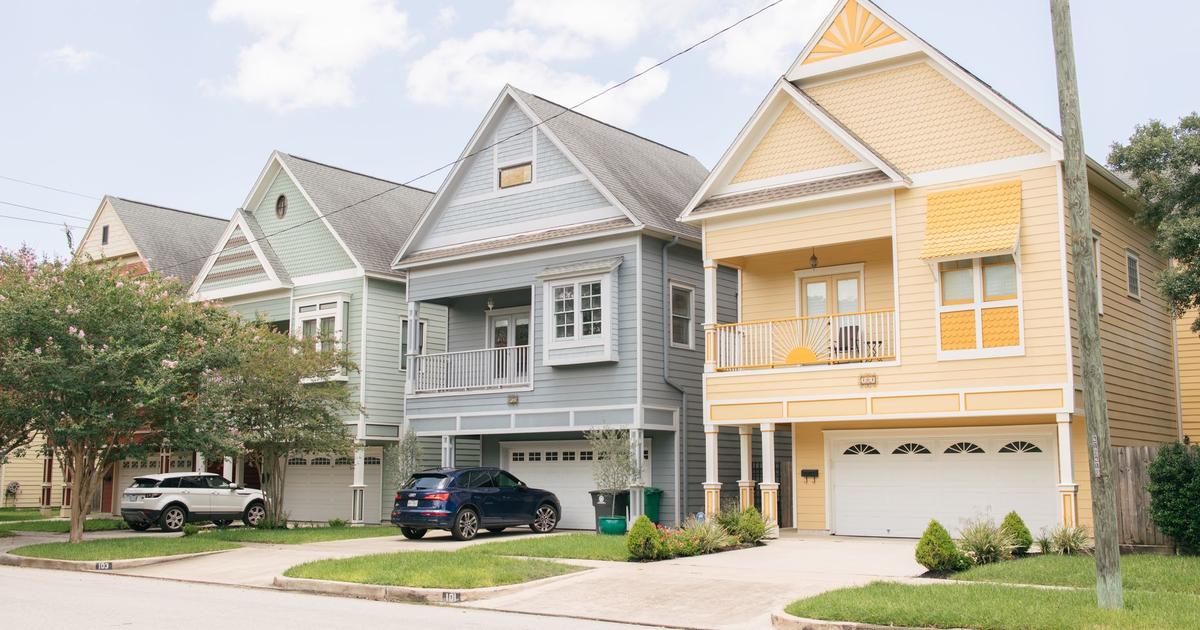
If you want a house where nothing has ever broken yet, Opelika is delivering. The city's own numbers are the clearest way to see it. More than 2,000 new residential units were entitled in Opelika in 2025, and the city counts more than 6,500 approved residential lots plus more than 2,500 townhouse, multi-family or mixed-use units already approved or working through planning and construction (City of Opelika, February 2026).
That is a genuinely unusual pipeline for a city this size, and it's the single biggest reason Opelika feels different from Auburn's resale-heavy older neighborhoods.
It's also why the city hit pause. Opelika adopted a one-year planning moratorium on certain new residential approvals, running May 1, 2026 through April 30, 2027, covering upzoning requests, new preliminary subdivision plats, and new conditional use approvals for multi-family or mixed-use. Projects already approved, homes under construction, and existing building permits are not affected, which is why you'll keep seeing new houses come to market through the moratorium window. Ask me what it means for a specific street or a specific builder, because the answer depends on when that plat was approved.
What I'd tell you as a buyer: standing builder inventory and a resale house are two different negotiations. Builders price to move a phase, and they have incentives that don't show up in a list price. The owner of a 1920s house on Geneva does not. Which of those you're better off in depends on your timeline and your tolerance for a renovation, and it's worth an hour on the phone before you start touring.
What a house actually costs in Opelika
Everybody wants a single number. I'm going to tell you why I won't hand you one.
A citywide Opelika median blends a new build off the bypass with a restored Northside Victorian, and with this much new construction closing, the mix alone can move that number without any individual house changing value. So a citywide median that rises doesn't necessarily mean your house did. It might just mean more new homes closed that month.
What matters is what a specific street costs. That's neighborhood-level work, and it's the part I do by hand.
If you want a real number on your own house instead of a portal guess, start with a home valuation and then let's talk. An online estimate is a starting point, not a formal CMA or an appraisal.
Opelika City Schools: the actual roster
Attendance zoning is one of the most common things people get wrong when they're picking a neighborhood here. So, plainly, here's what the district operates. Opelika City Schools runs nine schools serving pre-K through grade 12:
Level | Schools |
|---|---|
Primary | Carver Primary, Jeter Primary, Southview Primary |
Intermediate | Morris Avenue Intermediate, Northside Intermediate, West Forest Intermediate |
Grade 6 | Fox Run School |
Middle | Opelika Middle School |
High | Opelika High School |
The district also lists Career Technical Education, English Language Learners services, Special Education services, and Extended Day programming.
Sources: Opelika City Schools, retrieved August 2026. Fox Run School's grade span from the National Center for Education Statistics.
I'm giving you the roster, not a ranking. Zoning can change, and it's assigned by address, not by neighborhood name. Verify the zone for the specific property with the district before you write an offer. Every time. I'll help you do it.
The Gig City thing
In 2015, Opelika started putting up signs calling itself Alabama's first "Gig City." Mayor Gary Fuller announced it that June, and at the time the city owned and operated 425 miles of fiber across the incorporated limits, the only municipal 100 percent fiber network in the state (Opelika Observer, June 2015).
Here's the part that gets left out of every relocation blog that repeats the slogan. The city sold the network. Point Broadband closed on the purchase of the fiber assets and operations, branded OPS ONE, on November 8, 2018. The fiber is real and it's still in the ground. The city just isn't your internet provider anymore.
I'm Amy Cotney, and I check service at the actual address for every Opelika buyer I work with, because the slogan is history and a service map is not the same thing as a sign at the city limits.
So treat "Gig City" as accurate history and evidence of a real fiber build, not as a promise about your specific address. Check service at the address before you count on it. If you work from home, do that check before you fall in love with a house.
Other Opelika names you'll hear
Search "Opelika subdivisions" and you'll hit names like Cannongate, Stephens Woods, Ward Heights, and Cedar Creek off Lafayette Parkway. They come up constantly in local listing feeds.
I've left them out of the sections above on purpose. I could not put a solid published source behind their boundaries the way I can with the National Register districts, and I'd rather drive you through them than describe them from a desk. Ask me, and we'll go look.
Questions I get about Opelika neighborhoods
What are the best neighborhoods in Opelika, AL?
Opelika, Alabama has four National Register historic districts, listed between 1984 and 2014: Railroad Avenue, Geneva Street, Northside, and Pepperell Mill and Mill Village. It also has National Village, a golf community at Grand National, plus new construction on the north and west sides. I won't rank them. The fit comes down to old house versus new.
I don't publish a ranking, and I'd be skeptical of anyone in Lee County who does. A ranked list is really just the writer's own preferences wearing a number, and it tells you nothing about whether a 1910 house on Geneva or a 2024 build off Lafayette Parkway is the right call for your budget and your patience. What I can hand you is the fact pattern: published district boundaries, the courses, the school roster, and the approval pipeline. You bring the priorities, I'll get you to the right three streets.
Is Opelika a good alternative to Auburn, AL?
Opelika and Auburn are adjacent cities in Lee County, Alabama, and they're genuinely different markets, not a better-or-worse pair. Opelika gives you a compact historic downtown core, four National Register districts, and a heavy new-construction pipeline. Auburn's inventory skews differently. Most of my buyers end up touring both, and I'd encourage that. My Auburn neighborhood comparison is the companion piece to this one.
Which Opelika neighborhoods have historic homes?
All four of Opelika, Alabama's National Register districts, in different flavors. Railroad Avenue, Geneva Street, and Northside hold the concentrated in-town residential stock, with Northside's nomination documenting Queen Anne, Bungalow, Neoclassic, Mission, and Tudor Revival houses built between 1880 and 1951 (National Register of Historic Places nomination, Northside Historic District, ref #01001409, National Park Service). Pepperell Mill and Mill Village, listed in 2014, is mill village housing built mostly between 1925 and 1960.
Is new construction the better buy in Opelika right now?
It depends on your tolerance for negotiating versus your tolerance for renovating. What the city's own figures say is that new construction is not scarce in Opelika, Alabama: more than 2,000 residential units were entitled in 2025, and more than 6,500 approved lots are in the pipeline (City of Opelika, February 2026). Builders carry standing inventory in a market like that, and standing inventory usually means more room to ask.
How much do homes cost in Opelika?
Not a question a citywide number answers well in Opelika, Alabama, because the city's closings mix a lot of new construction in with century-old in-town houses, and that mix moves a citywide figure around on its own. Ask me for the comparable sales on the specific street you're looking at, or start with a home valuation if you're the one selling.
Do I need to see Opelika in person to buy here?
No. I do this constantly for relocating buyers, with video walkthroughs and honest notes about what the listing photos are hiding. Being your eyes on the ground is a real part of the job.
Ready to go look at Opelika?
Pick your fork in the road first. Historic character with a maintenance budget, or new construction with negotiating room. Downtown-close, or more lot. Once I know that, I can get you to the right three streets instead of the wrong thirty.
I'm not going to tell you a neighborhood is perfect when it isn't. That's not how I work, and it's not what you need from me.
If you're thinking about buying or selling in Opelika, reach out. I'd love to help. You can also browse current listings or start with my Opelika neighborhood overview.
Making real estate uniquely personal, through communication, not automation.
Amy Cotney, REALTOR®, is a licensed real estate salesperson (Alabama license #108235) with Roots Real Estate - Investment Development, 235 N Gay St, Auburn, AL 36830. Call or text (334) 332-4002 or email [email protected]. Equal Housing Opportunity.
Information here is deemed reliable but not guaranteed, and readers should independently verify anything they plan to act on. Online home value estimates are a starting point, not a formal comparative market analysis or appraisal. School attendance zones are assigned by address and can change; verify with Opelika City Schools. Local rules change, including the moratorium described above; confirm current requirements with the City of Opelika before relying on anything here. This is not legal, tax, or lending advice.
Hero photo: Rivers A. Langley / SaveRivers, CC BY-SA 3.0, via Wikimedia Commons. Cropped from the original.